Understanding the Pakistani Chicken Biryani Recipe
Pakistani Chicken Biryani is not just a dish; it’s an experience that embodies the rich culinary traditions of South Asia. Often considered a comfort food, biryani is a one-pot meal that expertly combines aromatic basmati rice, tender chicken, and an array of spices, creating a delight for the senses. If you’re seeking a straightforward yet authentic Pakistani chicken biryani recipe, you’re in the right place. This article will guide you through making the perfect biryani with simplicity and ease.
What is Biryani?
Biryani is a popular South Asian dish made primarily with rice and meat, layered with aromatic spices. It comes in numerous varieties, influenced by regional spices and cooking techniques. The essence of biryani lies in the method of cooking the rice and meat together, allowing the flavors to meld beautifully.
Origins and Cultural Significance
The origins of biryani trace back to Persian cuisine, where the word "birian" means "fried before cooking". It made its way to the Indian subcontinent, particularly Pakistan, through Mughal influence. Over the years, biryani has evolved, showcasing a unique blend of local spices and ingredients that make it a beloved dish among Pakistanis. Particularly in Karachi, biryani has become synonymous with culinary pride, with families often guarding their secret recipes zealously.
Traditional vs. Modern Recipes
While traditional biryani recipes require extensive marination and precise timing, modern takes have simplified these methods, making it more accessible to home cooks. Today, you can find quick versions that utilize pre-made spice mixes or other shortcuts without sacrificing flavor, allowing everyone to enjoy this signature dish.
Why This Recipe is Super Simple
Minimal Ingredients and Tools Required
This biryani recipe is designed for ease. With only a few ingredients and minimal cooking tools required, you can create a delicious meal that feels gourmet. Essential ingredients include chicken, basmati rice, and a mix of spices. Cooking tools such as a heavy-bottomed pot and a simple strainer are all you need.
Step-by-Step Instructions
The simplicity of this recipe lies in its straightforward steps. Each portion is broken down clearly, making it easy for anyone, even novice cooks, to follow along without overwhelming complexity.
Visual Cues for Success
Whether it’s watching for the rice to turn from opaque to translucent or the spices to bloom in the oil, visual cues throughout the cooking process ensure that you can confidently gauge your progress. These indicators help to prevent common cooking mistakes like burning spices or overcooking rice.
How to Make Pakistani Chicken Biryani: A Step-by-Step Guide
Parboiling the Rice
Start by bringing a large pot of water to a boil. Add 3 liters of water along with 3 teaspoons of salt. Once the water is boiling, add 3 cups of basmati rice. Parboil the rice until it's about 80% cooked—this will ensure it doesn't become mushy when combined with the chicken.
Preparing the Chicken Masala
In a pan, heat ½ cup of oil and sauté one large chopped onion until golden brown. Add one tablespoon of ginger-garlic paste and cook until fragrant. Then, introduce 800 grams of chicken, browning it before adding spices and tomatoes. This combination will create a rich and savory masala that will infuse the rice with flavor.
Layering and Cooking Techniques
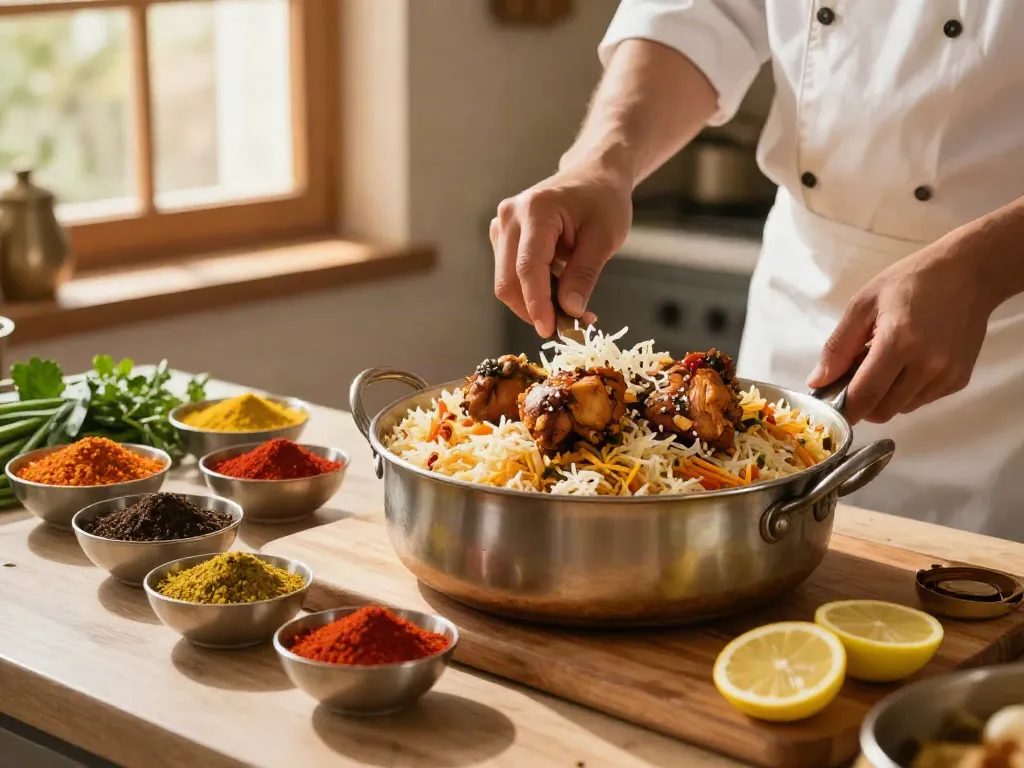
Once the chicken is tender, it’s time to layer the biryani. Start with a layer of chicken in the pot, followed by the parboiled rice. Repeat the layers, topping the final layer of rice with garnishes like lemon slices, mint leaves, and a sprinkle of orange food color to enhance presentation. Seal the pot and cook on low heat for about 25 minutes, which is the slow cooking method known as “dum”.
Achieving Perfect Texture and Flavor
Secrets for Fluffy Rice
To attain that perfect fluffy rice texture, use high-quality basmati rice and ensure it is soaked in water for at least 30 minutes before cooking. This allows the grains to absorb moisture, helping them remain separate and fluffy when cooked.
Balancing Spices and Marinades
Striking the right balance of spices is key. Every ingredient should enhance the dish without overpowering it. Using yogurt to marinate the chicken not only tenderizes the meat but also adds a creamy texture to the biryani.
Common Mistakes to Avoid
Overcooking the rice and undercooking the chicken are common pitfalls. Always remember to parboil the rice; it should still have a slight bite to it. Additionally, allow the chicken enough time to cook through before mixing with the rice.
Pairing and Variations
Best Side Dishes for Biryani
While biryani can hold its own, pairing it with raita—a yogurt-based condiment—is traditional and enhances the overall meal. Raita can be made with chopped cucumber, onions, and fresh herbs, giving a refreshing contrast to the spicy biryani.
Creative Variations with Other Proteins
This recipe can easily be adapted for different proteins. For beef or mutton biryani, consider increasing the cooking time to ensure tenderness. The spices remain the same, allowing you to explore diverse flavors without reworking the entire recipe.
Substitutions for Dietary Preferences
Vegetarian options can also be created using mixed vegetables instead of chicken. Adjust the spices according to taste preference, and consider adding nuts or paneer for richness.
What is the secret taste of biryani?
The secret taste of biryani lies in its spices—cumin, coriander, and garam masala, among others—which should be balanced meticulously. Additionally, the slow cooking method allows flavors to meld and intensify, contributing to the dish’s unique taste.
Is Pakistani biryani different from Indian biryani?
Pakistani biryani typically has a unique flavor profile due to the regional spices used and cooking styles that reflect local preferences. While both share similar roots, the variations bring distinct characteristics to each dish.
What is the recipe for Pakistani chicken biryani?
The recipe involves marinating chicken, preparing a flavorful masala, parboiling rice, and then layering and cooking them together. Each of these steps contributes to the final delicious outcome.
What is the secret to a good biryani?
Using quality ingredients, careful balancing of spices, and mastering cooking techniques are all essential for creating a great biryani. The patience to properly layer and cook the dish using the "dum" method enhances its characteristic flavors.
Can I use yellow food color instead?
Absolutely! Yellow food color can be used as a substitute for orange, giving the biryani a vibrant hue while still maintaining its aesthetic appeal.